
Breaking News:Baby girl left in locked Dallas day care
A 14-month-old girl was left locked in a closed Red Bird-area day care center Tuesday, police said. The girl appeared unhurt, though the mother took her to a local hospital as a precaution, police said. The mother called police when she arrived about 7 p.m. at the center in the 7000 block of Greenspan Avenue to pick her up, police said. Authorities entered the L&S Early Childhood Learning Academy to get the girl. In August 2003, an 8-month-old boy died from heat exposure after he was left in a vehicle at a day care center with a different name at the same location. The center says it is now under new management.
Article From :http://www.dallasnews.com/sharedcontent/dws/dn/latestnews/stories/DN-daycare_10met.ART.State.Edition1.420e5a2.html
Feeding schedule: Important when starting solids? Q&A
Q.
My five-month-old daughter is just starting solids. I do not have her on a schedule and feed her only when she is hungry. Do you feel that a schedule is necessary?
A.
Schedules are very Darwinian: they tend to evolve over time, and then change and adapt as the baby grows. During the first few months, babies should be allowed to eat on demand -- that is, when they are hungry. As they get older and begin eating solid foods you can help ease them into a schedule.
As soon as your baby can sit unsupported in a high chair, have her join you at the dinner table. Or, even before that, prop her baby seat on the table so she can join you for the family evening meal.
Because eating schedules tend to evolve, they shouldn't be strict. In fact, babies and children often hit growth spurts that appear to make them hungry all the time. In those cases, you may have to let the schedule fall by the wayside, and then return to it as soon as you can.
Schedules serve a couple of purposes. For one thing, they are convenient. It makes life easier for caregivers so they can plan meal preparation. Also, meals will ultimately be nutritionally superior: It has been shown that kids who eat at set meal and snack times are slimmer and do better nutritionally than those who don't. "Grazing," eating small amounts of food all day long, is also a nutritionally superior way to go, but only if the person pays careful attention to food choices. Grazing times should be set like mini-meals, as opposed to eating all day long.
Whether your child consumes a regular three meal per day pattern with small snacks in between, or six or seven mini-meals, scheduled eating times that allow for some flexibility are the best choice for older babies. Your daughter's age is an excellent time to startArticle From :http://parenting.ivillage.com/baby/bnutrition/0,,43jg,00.html
10 Things You Need to Know II
6. Introduce only one new food each week. The best time for offering new foods is in the morning. This makes it easier to observe your baby for signs of an allergic reaction, such as a rash, runny nose, congestion, ear infection, fussiness or an upset tummy. Watch for severe reactions. If these occur they should be reported to your baby's health care provider.
7. Expect a change in your baby's stools. As you add solid foods to your baby's diet you will see a change in the color, consistency and frequency of your baby's bowel movements. It is normal to see the stools change color, depending on the food your baby eats. It is also likely that you will see undigested bits of food in your baby's stool.
8. Remember that babies have tiny tummies and do best with small amounts offered through the day, rather than three bigger meals.
9. Follow baby's cues. If your baby doesn't like a food, or just isn't hungry, don't force the issue. (It won't hurt your baby to go back totally to breast or bottle and take a solid food break for a few days.) It's important to keep mealtime enjoyable.
10. Make meals a social event. Allow your baby to sit with the family at mealtime so she can begin to enjoy the social side of sharing a meal with the family. Babies usually love this interaction.
Article From :http://parenting.ivillage.com/baby/bnutrition/0,,69w0,00.html
10 Things You Need to Know II
6. Introduce only one new food each week. The best time for offering new foods is in the morning. This makes it easier to observe your baby for signs of an allergic reaction, such as a rash, runny nose, congestion, ear infection, fussiness or an upset tummy. Watch for severe reactions. If these occur they should be reported to your baby's health care provider.
7. Expect a change in your baby's stools. As you add solid foods to your baby's diet you will see a change in the color, consistency and frequency of your baby's bowel movements. It is normal to see the stools change color, depending on the food your baby eats. It is also likely that you will see undigested bits of food in your baby's stool.
8. Remember that babies have tiny tummies and do best with small amounts offered through the day, rather than three bigger meals.
9. Follow baby's cues. If your baby doesn't like a food, or just isn't hungry, don't force the issue. (It won't hurt your baby to go back totally to breast or bottle and take a solid food break for a few days.) It's important to keep mealtime enjoyable.
10. Make meals a social event. Allow your baby to sit with the family at mealtime so she can begin to enjoy the social side of sharing a meal with the family. Babies usually love this interaction.
Article From :http://parenting.ivillage.com/baby/bnutrition/0,,69w0,00.html
10 Things You Need to Know I
1. Make sure your baby is ready. The American Academy of Pediatrics recommends waiting until your baby is at least four to six months of age before introducing solid foods. Around this time your baby will begin to show signs of readiness for solids. She begins to sit up well, unsupported; she can pick up small items; and she is very interested in what is on your dinner plate. Every baby is different: It is more important to watch your baby for signs of readiness than to decide an arbitrary time for introducing solids.
2. Go slowly. You and your baby have lots of time to explore this whole new world of culinary delight. Offer your baby very small amounts of food to start out (a half teaspoon or so). Gradually increase the amount you are offering until you are giving your baby one-quarter cup or so of food at a time.
3. Breast milk or formula comes first during baby's first year. To keep an adequate milk supply, if you are breastfeeding, and to provide your baby with his most important food during his first year of life, nurse or feed your baby formula before offering solid foods.
4. There is not one best, set-in-stone, method of food progression. Your baby's likes and dislikes and your family history of allergies/asthma will play a big role in which foods you offer your baby -- and when.
5. Expect things to be a bit messy. Much of the food you feed your baby will end up on her clothes and on the floor. This is par for the course, so dress appropriately.
Continue Part II
Article From : http://parenting.ivillage.com/baby/bnutrition/0,,69w0,00.html

Baby bottle Tips:P
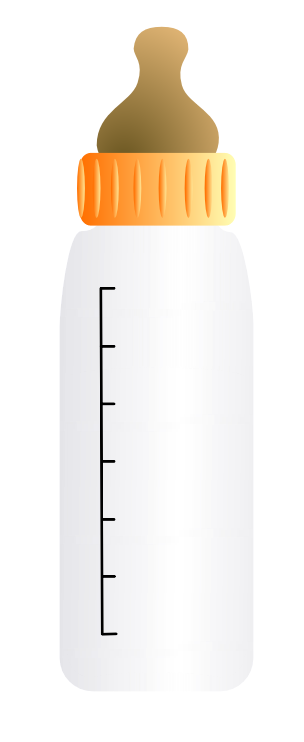
A baby bottle is a bottle with a teat (also called a nipple in the US) to drink directly from. It is typically used if someone can not (as conveniently) drink from a cup, for feeding oneself or being fed.
In particular it is used to feed an infant with infant formula, expressed breast milk or pediatric electrolyte solution.
What should you do ?
- Never leave baby unattended while feeding. Besides the possibility of accidents, you'll want to be there to observe your baby’s feeding habits, changes in preferences – and just enjoy this especially close time.
- Never feed baby while he or she is sleeping or lying down. Until the child can sit up and hold his or her own bottle, hold baby semi-upright. This way you can make sure that the liquid flows directly down the throat, not into nose (which can cause ear infections) or into the lungs, making baby choke.
- Use a clean bottle every time. Bottles and nipples should be washed and rinsed thoroughly before the first use, following the manufacturer’s instructions. After that, wash and dry bottles after each use – again, according to the manufacturer’s instructions.
- Always check the temperature of a bottle’s contents before giving it to baby. In most cases, it needs only to be at room temperature – that is, it should feel slightly warm (not hot!) on your skin.
- Always discard anything left in a bottle after a feeding. Then clean the bottle before the next use, even if it only contained water. This will help ensure a safe and germ-free feeding.
Information from: http://www.babybottle.org/safe_01.html
Why fill baby teeth? Q& A
Q.
It seems that filling baby teeth is a typical western scientific response that has little or no merit. I'm aware that there are always special circumstances where this procedure may be indicated. When is filling a baby tooth really a valid procedure?

A.
There is more than a little merit to treating primary teeth, and there are many factors involved in determining proper treatment. First of all, these "temporary" teeth are actually needed for several years. The incisors are typically present until six to eight years of age, while the canines and molars are present until 11 to 13 years of age. Primary teeth serve many different functions, such as chewing, phonetics, and space maintenance for permanent teeth.
If decay in primary teeth is left untreated, it will only progress. This progression can lead to pain and infection, which may eventually turn life- threatening. In addition, broken down, painful, infected teeth will lead to a decrease in nutrition, which will affect physical and mental growth and development of the child. In fact, parents or caregivers who do not provide proper access to dental care can be charged with child neglect.
Of course, dentists strive to prevent cavities from forming in the first place. Education is paramount. Parents and caregivers should be informed about proper oral hygiene. For example, parents should begin cleaning a baby's teeth as soon as they emerge. Children under six-years-old need to have adults help them with brushing and flossing. Even children in the six to ten age range should have parents check after brushing and flossing to ensure an adequate job was done. Disclosing tablets can also be helpful to show the areas where plaque still remains. Fluoride, properly used and in very small quantities, can be quite beneficial in reducing or eliminating tooth decay.
A child's diet should be carefully monitored. Children who are more susceptible to decay may need diet modification. Parents should remember that frequency of sugar intake is more important than overall intake. Keep in mind that frequent consumption of soft drinks can lead to a higher rate of decay, and many foods labeled with "no added sugar" may contain high levels of natural sugar. Regular dental visits are important for helping children keep their teeth clean, educating them about proper care, and catching problems early while they are more easily managed. Dental sealants also play an important role in preventative dentistry.
In addition to prevention, patients who are at risk for cavities should be screened. Several factors including family background, the individual, and the general oral environment should be considered. Patient background should include a family history of decay, water fluoride levels, epidemiology, ethnicity, and socioeconomic variables. Individual characteristics include age, orthodontics, diet, and medications that may lead to a decrease in saliva. Oral information includes past restorations and frequency of decay, eruption of teeth (newly erupted teeth are sometimes more at risk), oral hygiene, tooth morphology and salivary flow. Prevention can be designed individually to help combat some of these risk factors.
When decay is detected, several factors are considered. Two main considerations are the dental age of the child and the condition of the tooth in question. For example, if a radiograph, more commonly known as an x-ray, reveals that the cavity is small and the tooth is soon to be lost, treating the tooth would not be necessary. If, however, it appears that the tooth will remain in place for years longer, removing the decay and placing a filling would be most prudent. If the tooth is severely decayed and/or shows signs of infection, extraction or treatment of the tooth should be consideredArticle From:http://parenting.ivillage.com/baby/bhealth/0,,442b,00.html
Woman charged in death of infant son
A Joplin-area woman has been charged with involuntary manslaughter in the death of her infant son because she was allegedly high on drugs when she rolled over him in bed.
The charge alleges that Jessica C. Jones, 27, used methamphetamine and marijuana before sleeping in the same bed with her 4-month-old son, Ashton. The baby died in early August, and Newton County Assistant Prosecuting Attorney Bill Dobbs announced the charge Tuesday.
In February 2006, Jones' 3-month-old son, Jericho, died under similar circumstances, according to investigators. Jericho's death was ruled to have been caused by accidental asphyxiation during sleep, and his mother was not charged.
Jones was arrested Friday and remained in custody Wednesday at the Newton County Jail, with bond set at $30,000.
Court records showed she did not yet have an attorney, and she had not entered a plea Wednesday.
Dobbs said the woman's four other children were removed from the home in August after investigators found dog feces, rotten food and clothing piled up to a foot deep in the trailer. They remain in state custody.
News From: http://www.news-leader.com/apps/pbcs.dll/article?AID=/20071011/NEWS01/710110392/1007/NEWS01
Dad Fails to See Baby Fall From Stroller

Geraldine Johnson, 37, said she awoke to a baby's cries about 3 a.m. Tuesday and ran to the field, where she found the child in the dirt. She called police and an ambulance, police Lt. Thomas Stacho said Wednesday.
The baby was taken to a hospital and found to be uninjured, then was taken to welfare authorities, Stacho said.
Police talked to the father, who had returned to the field looking for the boy.
The man, whose name was not released, told police he was intoxicated when he was pushing his son in a stroller across a field and didn't notice the baby was missing until he got home.
"He was intoxicated and told officers he had been drinking since about 3 p.m. Monday," Stacho said.
Prosecutors will decide whether to charge the man with wanton endangerment.
The man told officers that he had been pushing his son in a stroller across the field in the dark and hit a bump, and that the baby must have bounced out, Stacho said.
The infant has been placed with his maternal grandmother while the mother complies with welfare measures, officials said.Article From : http://ap.google.com/article/ALeqM5inimCZTYDq7lf-srEgWYcSfP51WAD8S6PBFO3
Do you know: Sudden infant death syndrome ?
This From wiki :
Sudden infant death syndrome (SIDS) is a syndrome marked by the symptoms of sudden and unexplained death of an apparently healthy infant aged one month to one year. The term cot death is often used in the United Kingdom, Australia and New Zealand, while crib death
is used in North America.
Risk factors and statistics
SIDS is responsible for roughly 0.05%, or 50 deaths per 100,000 births in the U.S. It is responsible for far fewer deaths than congenital disorders and disorders related to short gestation, though it is the leading cause of death in healthy babies after one month of age.
Very little is known for sure about the possible causes of SIDS, and there is no proven method for prevention. Although studies have identified risk factors for SIDS, such as putting infants to bed on their stomachs, there has been little understanding of the syndrome's biological cause or causes. The frequency of SIDS appears to be a strong function of infant sex and the age, ethnicity, education, and socio-economic status of the parents.
According to a study published in October 2006 in the Journal of the American Medical Association, babies who die of SIDS have abnormalities in the part of the brain that helps control functions like breathing, blood pressure and arousal. Researchers examined the brains of 31 babies who had died of SIDS and 10 who had died from other causes. They found that abnormalities in the brain stem appear to affect the ability to use and recycle serotonin, which is responsible for regulating mood as well as vital body functions. According to the National Institutes of Health, which funded the study, the new finding is the strongest evidence to date suggesting that innate differences in a specific part of the brain may place some at increased risk of dying from SIDS.
Listed below are several factors associated with increased probability of the syndrome based on information available prior to this recent study.
Article from :http://en.wikipedia.org/wiki/Sudden_infant_death_syndrome#Speculated_associations
Care baby units 'at breaking point'
Special care baby units across the UK are "near breaking point", a report says.
A lack of funding has left units struggling more than ever to reach minimum staffing levels in the last year, according to the baby charity Bliss.
Only a handful of units were able to meet the minimum recommended staffing levels, with many forced to refuse new admissions for considerable periods of time.
Mothers and babies may be forced to travel long distances in search of a unit with the appropriate facilities to care for them, the charity said.
Bliss's new study - Too little too late - are we ensuring the best start for babies born too soon? - was based on surveys of 195 neonatal units across the UK.
It found that units were forced to refuse new admissions for an average total of two weeks out of a six-month period.
A total of 10% closed their doors to new admissions for eight weeks or more over six months.
The study also found that most units were operating above the 70% average occupancy level recommended by experts. One in eight of the most specialist units operated at an average occupancy of 100% or more for a whole year.
Although some new nurses have been recruited, the service is still 2,600 nurses short of the recommended number, the study said.
The report said demand for care was outstripping supply and the care and safety of babies was in danger of being compromised.
News From :http://ukpress.google.com/article/ALeqM5hOD7j6jEm-XgbWjk9pfgoZvzGGwA

Toy History

A toy is an object used in play. Toys are usually associated with children and pets, but it is not unusual for adult humans and some non-domesticated animals to play with toys. Many items are manufactured to serve as toys, but items produced for other purposes can also be used as toys. A child may pick up a household item and 'fly' it around pretending that it is an airplane, or an animal might play with a pinecone by batting at it, chasing it, and throwing it up in the air. Some toys are intended primarily as collector's items and are not to be played with.
The origin of toys is prehistoric; dolls representing infants, animals, and soldiers, as well as representations of tools used by adults are readily found at archaeological sites. The origin of the word "toy" is unknown, but it is believed that it was first used in the 14th century.
Toys and play in general are an important part of the process of learning about the world and growing up. The young use toys and play to discover their identity, help their bodies grow strong, learn cause and effect, explore relationships, and practice skills they will need as adults. Adults use toys and play to form and strengthen social bonds, teach the young, remember and reinforce lessons from their own youth, exercise their minds and bodies, practice skills they may not use every day, and decorate their living spaces. Toys are more than simple amusement, and they and the way they are used profoundly influence most aspects of life.
Article From:http://en.wikipedia.org/wiki/Toy
Acquainting Your Baby With a Sitter

Whenever possible, let your child get to know the babysitter while you're there. Ideally, have the sitter spend time with him on several successive days before you leave them alone. If this isn't possible, allow yourself an extra hour or two for this get-acquainted period before you have to go out. During this first meeting, the sitter and your baby should get to know each other very gradually, using the following steps.
- Hold the baby on your lap while you and the sitter talk. Watch for clues that your child is at ease before you have the sitter make eye contact with him. Wait until the baby is looking at her or playing contentedly by himself.
- Have the sitter talk to the baby while he stays on your lap. She should not reach toward the child or try to touch him yet.
- Once the baby seems comfortable with the conversation, put him on the floor with a favorite toy, across from the sitter. Invite the sitter to slowly come closer and play with the toy. As the baby warms up to her, you can gradually move back.
- See what happens when you leave the room. If your baby doesn't notice you're missing, the introduction has gone well.
Article From:http://www.medem.com/MedLB/article_detaillb.cfm?article_ID=ZZZXTWKSYDC&sub_cat=13
Car Seat Baby Safty Tips
Be wary of used car seats. Be careful about using a car seat that belonged to someone else, it may have been damaged.
Always put your new baby in a rear-facing car seat in the back seat of your car. The back seat is the safest place for all children to ride. It is estimated that children ages 12 and under are 36 percent less likely to die in a crash if they are sitting in the back seat.
Don't put your baby in front of a passenger-side air bag. Here's another reason to put your baby in the back seat. About 20 percent of children killed by passenger-side air bags are infants in rear-facing child seats in front of an air bag. If you absolutely must put your baby in the front seat, make sure the air bag is turned off.
Infants (babies under one year) should ride in a rear-facing seat at least until they weigh 20 pounds and are one year of age. If your child fits in a rear-facing seat, leave her there past one year. It's really the safest position and it offers the best protection for your baby's head, neck and back.
Use the car seat every time baby rides. If someone offers to take your baby out, make sure the car seat goes too. And make sure it is installed correctly in the back seat. No one plans to have an accident. Most crashes happen close to home on roads with low speed limits.
Don't use your baby as an airbag. Never, ever put your child in your lap in a car. No matter how tightly you hold your child, he or she will not be safe in a crash. The baby could fly through the windshield, hit the dashboard or be crushed by your body. Always put the baby in his or her car seat.
Never leave your baby in the car, even just for a moment. Sadly, many babies die each year because they were left in an overheated car, while Mom or Dad ran to do a quick errand. Cars can heat up fast in the hot sun and a baby can overheat quickly. Avoid this tragedy by taking your baby with you when you leave the car.
If you're not sure your car seat is installed correctly, get it checked out. Follow the manufacturer's instructions carefully when you install the car seat. Then get it checked out. Visit the Safe Kids Web site to find an event near you where trained people will inspect your car seat and make sure it is installed and used correctly�free of charge. Some local police stations and hospitals also offer this service.
Article From :http://www.marchofdimes.com/pnhec/298_1041.asp

When You Should Worry About Your Child
The signs below may mean your baby is very ill. Call your baby�s doctor right away if your baby:
Article From:http://www.marchofdimes.com/pnhec/298_1041.asp

Medical Concern on first month
Baby's First Month: Medical Concerns CARING FOR YOUR BABY AND YOUNG CHILD For purchasing or reprint information, click here. The following medical problems are of particular concern to parents during the first month.
Breathing Difficulties Normally, your baby should take from 20 to 40 breaths per minute. This pattern is most regular when he is asleep and healthy. When awake, he may occasionally breathe rapidly for a short period, then take a brief pause (less than ten seconds) before returning to normal breathing. If he has a fever, his breathing may increase by about two breaths per minute for each degree of temperature elevation. A runny nose may interfere with breathing because his nasal passages are narrow and fill easily. This condition is eased by using a cool-mist humidifier and gently suctioning the nose with a rubber aspirating bulb (ordinarily given to you by the hospital). Occasionally, mild salt-solution nose drops are used to help thin the mucus and clear the nasal passages. Excessive Sleepiness Because each infant requires a different amount of sleep, it's difficult to tell when a baby is excessively drowsy. If your infant starts sleeping much more than usual, it might indicate the presence of an infection, so notify your pediatrician. Also, if you are nursing and your baby sleeps more than five hours without a feeding in the first month, you must consider the possibility that he is not getting enough milk or perhaps is being affected through the breastmilk by a medication that you are taking.
Floppiness Newborn infants all seem somewhat floppy because their muscles are still developing, but if your baby feels exceptionally loose or loses muscle tone, it could be a sign of a more serious problem, such as an infection. Consult your pediatrician immediately. Hearing Problems Pay attention to the way your baby responds to sounds. Does she startle at loud or sudden noises? Does she become quiet or turn toward you when you talk to her? If she does not respond normally to sounds around her, ask your pediatrician about formal hearing testing. This testing might be particularly appropriate if your infant was extremely premature, was deprived of oxygen, had a severe infection at birth, or if your family has a history of hearing loss in early childhood.
If there is any suspicion of hearing loss, your infant should be tested as early as possible, as a delay in diagnosis and treatment is likely to interfere with normal language development. Jitters Many newborns have quivery chins and shaky hands, but if your baby's whole body seems to be shaking, it could be a sign of low blood sugar or calcium levels, or some type of seizure disorder. Notify your pediatrician so he can determine the cause. Rashes and Infections Common newborn rashes include the following: * Cradle cap (seborrheic dermatitis) appears as scaly patches on the scalp. Washing the hair and brushing out the scales daily helps control this condition. It usually disappears on its own within the first few months but may have to be treated with a special shampoo. * Fingernail or toenail infections will appear as a redness around the edge of the toenail or fingernail, which may seem to hurt when touched. These infections may respond to warm compresses but usually need to be examined by a doctor. * Umbilical infections often appear as redness around the umbilical stump. They should be examined by your pediatrician. * Diaper rash Thrush White patches in the mouth may indicate that your baby has thrush, a common yeast infection. This condition is treated with an oral antifungal medication prescribed by your pediatrician. Vomiting If your baby starts forcefully vomiting (shooting out several inches rather than dribbling from the mouth), contact your pediatrician at once to make sure the baby does not have an obstruction of the valve between the stomach and the small intestine (hypertrophic pyloric stenosis). Any vomiting that persists for more than 12 hours or is accompanied by diarrhea or fever also should be evaluated by your pediatrician. Weight Gain Problems Your baby should be gaining weight rapidly (1/2 to 1 ounce per day) by the middle of this month. If he isn't, your pediatrician will want to make sure that he's getting adequate calories in his feedings and that he is absorbing them properly. Be prepared to answer the following questions: * How often does the baby eat? * How much does he eat at a feeding, if bottle-feeding? How long does he nurse, if breastfeeding? * How many bowel movements does the baby have each day? * What is the amount and thinness or thickness of the stools? * How often does the baby urinate? If your baby is eating well and the contents of his diapers are normal in amount and consistency, there is probably no cause for alarm. Your baby may just be getting off to a slow start, or his weight could even have been measured wrong. Your pediatrician may want to schedule another office visit in two or three days to reevaluate the situation.
Article From :http://www.medem.com/MedLB/article_detaillb.cfm?article_ID=ZZZ7U2H3ZDC&sub_cat=549

Bathing and Skin Care For Your Baby II
How to give your newborn a tub bath:
Once your baby's umbilical cord has fallen off and the stump is healed, and after a boy's circumcision has healed, you can give your baby a tub bath. This can be a pleasurable experience for you and your baby. However, some babies may not like to be bathed, especially the first few times. Talk softly or sing and try some bath toys if your baby protests.
What equipment is needed for a tub bath?
- baby bathtub (preferably with a bottom drain plug)
- nonslip mat or pad
- bath thermometer (these often have "safe" bath temperature ranges marked on them)
When bathing your baby in a tub:
- Clear the counter or table top of breakable objects and electrical appliances to prevent injury.
- Fill the tub with warm water, using a bath thermometer.
- Follow the same general bathing instructions for a sponge bath.
- NEVER take your hands off your baby, or walk away, even for a moment.
- Be sure to clean the bathtub after each use.
Providing proper skin care for your newborn:
A baby's soft and delicate skin needs special care. Generally it is best to use products made especially for babies, but your baby's physician can advise you about other products. Products for adults may be too harsh for a baby and may contain irritants or allergens. Many parents like to use lotions for the sweet baby smell. However, unless the baby's skin is dry, lotions really are not needed. Powders should be avoided, unless they are recommended by your baby's physician. When using any powder, put the powder in your hand and then apply it to the baby's skin. Shaking powder into the air releases dust and talc which can make it hard for the baby to breathe.
Many babies have rashes and bumps that are normal. Some rashes may be a sign of a problem or infection. Diaper rash can be irritating to the baby and needs to be treated. If you have concerns about a rash, or your baby is uncomfortable or has a fever, call your baby's physician.
Laundry detergents may cause irritation to a baby's delicate skin. Even if you use a detergent marketed for baby laundry, it is a good idea to rinse the laundry an extra time to remove residues.
Article From:http://www.chp.edu/greystone/newborn/bathcare.php
